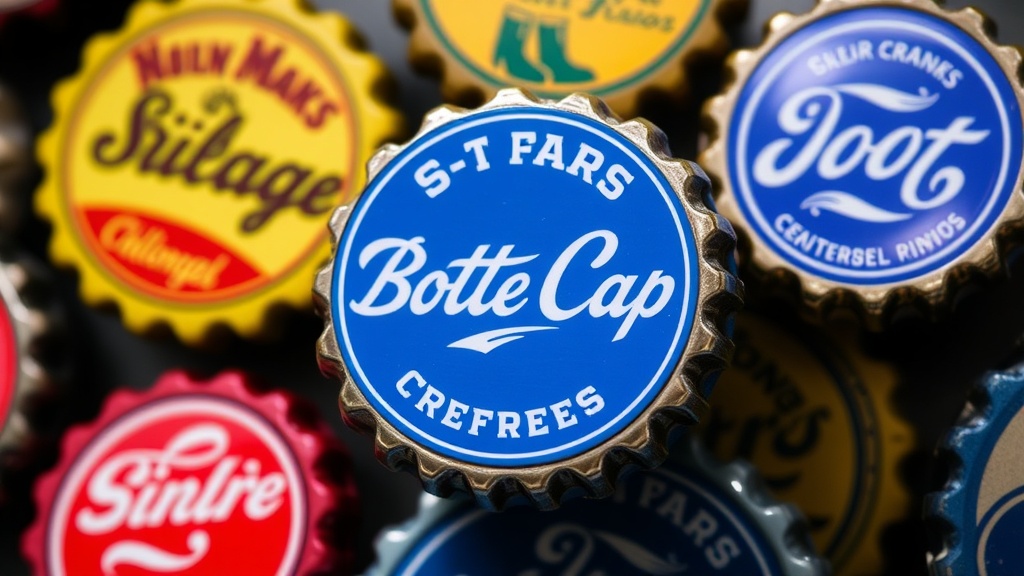
5 Vintage Bottle Cap Designs Every Collector Should Know About

Early Coca-Cola Cork-Backed Caps (1950s-1960s)
Pepsi-Cola Double Dot Logo Variants
Regional Brewery Crown Caps from Defunct Breweries
Dr Pepper 10-2-4 Advertising Caps
Limited Edition Holiday and Promotional Caps
Why Should Collectors Care About Vintage Bottle Cap Designs?
This post explores five distinctive vintage bottle cap designs that have shaped the collecting landscape—from early cork-lined crowns to the iconic twist-off innovations of the mid-20th century. You'll learn what makes each design historically significant, how to identify authentic specimens, and which caps command premium prices in today's market. Whether sorting through estate sale finds or building a curated display, understanding these foundational designs separates casual hobbyists from serious collectors.
What Are the Most Valuable Vintage Bottle Cap Designs?
The most valuable vintage bottle cap designs typically feature early crown cork variants from the 1890s to 1920s, limited-run advertising caps from regional breweries, and transitional designs that document packaging evolution. Rarity, condition, and historical significance drive value—not just age alone.
The crown cork design revolutionized beverage packaging when William Painter patented it in 1892. Before this innovation, bottles used cork stoppers secured with wire bails—a clumsy, unreliable method that spoiled easily. Painter's design featured a flanged metal cap lined with cork that could be crimped onto bottle lips using simple hand tools. Early examples from the Baltimore Crown Cork and Seal Company fetch $50 to $200 depending on condition and markings.
Here's the thing about early crowns—they weren't standardized. Pre-1900 examples often feature hand-tooled irregularities, thicker metal flanges, and natural cork liners that have since crumbled. Collectors prize caps from defunct regional breweries like Gablinger's of Milwaukee or the Honolulu Brewing & Malting Company. These represent snapshots of local commerce before national brands dominated shelves.
Condition grading matters enormously. A mint, uncapped specimen with intact liner rates significantly higher than one removed with a church key. The catch? Most surviving early crowns show wear. Finding examples with readable embossing and original cork—no mold, no degradation—requires patience and persistence.
| Design Era | Key Features | Typical Value Range | Rarity |
|---|---|---|---|
| 1890s–1910s | Hand-tooled flanges, natural cork, embossed brewery names | $25–$500 | Very Rare |
| 1920s–1933 | Near beer designs, medicinal tonic caps, pre-Prohibition logos | $15–$150 | Moderate |
| 1934–1950 | Standardized dimensions, cork liners, advertising art | $5–$75 | Common |
| 1951–1963 | Transition to plastic liners, full-color lithography | $3–$40 | Common |
| 1964–present | Twist-off crowns, aluminum variants, sports memorabilia | $1–$100+ | Variable |
How Did the Cork Liner Evolve Into Modern Seals?
The cork liner evolved into modern seals through a gradual shift from natural cork to composite materials in the 1950s, followed by the introduction of PVC and plastic liners in the 1960s—changes driven by cost reduction and sealing reliability improvements.
Natural cork dominated bottle cap construction for over sixty years. Harvested from Quercus suber trees in Portugal and Spain, this material provided excellent compression and created airtight seals when crimped. However, cork had drawbacks. It crumbled with age, imparted off-flavors to sensitive beverages, and varied in quality. By the late 1940s, manufacturers began experimenting.
The transition period fascinates collectors. Composite cork—ground cork bound with synthetic adhesives—appeared first. It offered consistency at lower cost. Then came the Screw Cap & Closure Manufacturers Association standards that encouraged experimentation. By 1962, many major bottlers had switched to Plastisol or PVC liners. These synthetic materials eliminated flavor contamination and extended shelf life dramatically.
Worth noting: the shift wasn't uniform. Smaller regional breweries and international manufacturers retained cork longer. Collectors often find 1970s caps from Mexico, Eastern Europe, or craft breweries still using genuine cork. These transitional specimens document an industry in flux. The metal itself changed too—steel gave way to aluminum in many applications, though crown caps remained predominantly steel until recent decades.
The Significance of Cork-Top Crowns
Cork-top crowns represent the foundational era of bottling history. These caps feature visible cork liners that extend slightly beyond the metal flange—unlike modern designs where liners hide completely inside. When found with original cork intact, they offer tangible connections to 19th and early 20th-century manufacturing.
Collectors should examine cork condition carefully. Dry, powdery cork indicates degradation. Good cork remains firm, slightly flexible, and free from mold spotting. Some specialists treat crumbling cork with conservation-grade consolidants—though purists debate this practice. Storage matters: humidity between 45% and 55% preserves cork best. Too dry causes crumbling; too damp invites mold.
Which Bottle Cap Designs Marked the Transition to Modern Packaging?
Two designs marked the transition to modern packaging: the Alcoa aluminum crown introduced in 1965 and the twist-off cap that gained commercial traction in 1968—both innovations that eliminated the need for separate opening tools and streamlined the consumer experience.
The aluminum crown represented material science advancement. Alcoa developed lightweight, corrosion-resistant crowns that reduced shipping costs and resisted rust better than traditional tinplate. Early Alcoa crowns often feature distinctive "Alcoa Aluminum" embossing on the skirt—the vertical flange that grips the bottle. These command modest premiums among completionists building aluminum-specific collections.
But the twist-off—now that's where collecting gets interesting. First patented in 1906, twist-off crowns didn't achieve widespread adoption until the late 1960s when Crown Holdings refined the design for commercial beer distribution. The concept was elegant: threaded glass bottle finishes paired with caps featuring internal threads and modified liners. Consumers could finally open beverages without church keys, pocket knives, or improvised solutions involving car keys and frustration.
Early twist-offs from 1968 to 1972 fetch $10 to $30 when found in unused condition. Look for "Twist to Open" embossing, experimental thread patterns, and limited production runs from test markets. Miller High Life, Schlitz, and Coors all produced collectible early twist-off variants. The design evolved rapidly—early versions required more torque and occasionally stripped threads. By 1975, most major brands had standardized.
Sports and Promotional Caps
The 1970s and 1980s witnessed an explosion of promotional bottle caps featuring sports teams, movie tie-ins, and sweepstakes offers. Coca-Cola caps from the 1972 Olympics in Munich represent early examples of mass-market commemorative designs. Baseball team caps from regional breweries—particularly in Wisconsin, Missouri, and California—remain highly sought.
These caps introduced full-color lithography to crown construction. Unlike earlier embossed or single-color designs, promotional caps featured detailed graphics, photographs, and complex color registration. The technical achievement shouldn't be underestimated—printing on curved metal surfaces required sophisticated presses and quality control.
How Can You Identify Authentic Vintage Caps Versus Reproductions?
You can identify authentic vintage caps by examining metal thickness, liner composition, embossing depth, and patina patterns—reproductions typically use thinner metal, modern synthetic liners, and lack the subtle oxidation characteristics of aged tinplate or aluminum.
Authentication requires close inspection. Original vintage crowns from before 1960 used thicker steel stock—typically 0.25mm or greater. Reproductions often feel flimsy, lighter, and show sharper, machine-precise edges that betray modern manufacturing. The liner tells stories too: genuine pre-1950 cork shows irregular grain patterns and natural color variations. Synthetic reproductions look uniform, too perfect, suspiciously consistent.
Patina develops character over decades. Authentic vintage caps display subtle oxidation patterns—slight dulling of original shine, micro-pitting on the skirt, color shifts in any exposed copper or brass plating. These characteristics prove difficult to fake convincingly. That said, some unscrupulous sellers artificially age reproductions using chemical treatments. Suspect caps showing uneven "rust" patterns, overly dramatic corrosion, or patina that rubs off easily.
For high-value acquisitions, provenance documentation provides reassurance. Estate collections with original storage containers, brewery archives, or documented auction histories carry authenticity weight. The Society for the Preservation of Beer History maintains resources for verifying rare specimens and identifying known reproductions circulating in the marketplace.
Collector Storage and Display Best Practices
Proper storage preserves both condition and value. PVC-free pages designed for crown caps prevent chemical interaction that can cause "green rot"—corrosion resulting from plasticizer outgassing. Slotted plastic cases offer protection while allowing viewing. Avoid direct sunlight exposure, which fades lithographed colors and degrades liners.
Serious collectors maintain environmental controls. Temperatures between 60°F and 70°F with stable humidity prevent metal fatigue and cork degradation. Desiccants help in humid climates, though excessively dry conditions prove equally damaging. Display considerations matter too—magnetic boards work for modern steel crowns but potentially damage older aluminum specimens. Archival-quality binders with acid-free pages remain the gold standard.
Where Do Collectors Find the Best Vintage Bottle Cap Specimens Today?
Collectors find the best vintage bottle cap specimens through estate sales in former industrial cities, brewery liquidation auctions, specialized dealer networks, and dedicated trading communities at shows like the BCCA Annual Convention.
The hunt rewards persistence. Estate sales in Rust Belt cities—Milwaukee, St. Louis, Cincinnati, Pittsburgh—regularly yield collections accumulated over decades by brewery workers and dedicated hobbyists. These "house finds" often contain unsearched variety, regional specialties, and pristine examples never circulated in the collector market. Arrive early, bring cash, and don't hesitate to make offers on entire lots.
Online marketplaces expanded access dramatically. eBay hosts thousands of listings daily, though quality varies wildly. Specialist dealers like those affiliated with the Brewery Collectibles Club of America offer graded, authenticated specimens with return policies. The BCCA's quarterly publication connects collectors with trading partners and documents new discoveries.
Here's the thing about building a meaningful collection: focus beats accumulation. Rather than amassing thousands of common post-1960 crowns, many experienced collectors specialize—pre-Prohibition breweries, foreign imports, specific graphic themes, or transitional materials. This approach yields deeper knowledge and more valuable holdings. A focused collection of fifty well-chosen vintage specimens often exceeds the value of ten thousand common modern crowns.
The five designs explored here—the early crown cork, composite transitional liners, aluminum variants, twist-off innovations, and promotional lithographed caps—represent the evolution of an everyday object into collectible art. Each tells stories of industrial innovation, marketing creativity, and changing consumer habits. Understanding these designs doesn't just improve collecting outcomes—it connects enthusiasts to tangible history, one small metal crown at a time.