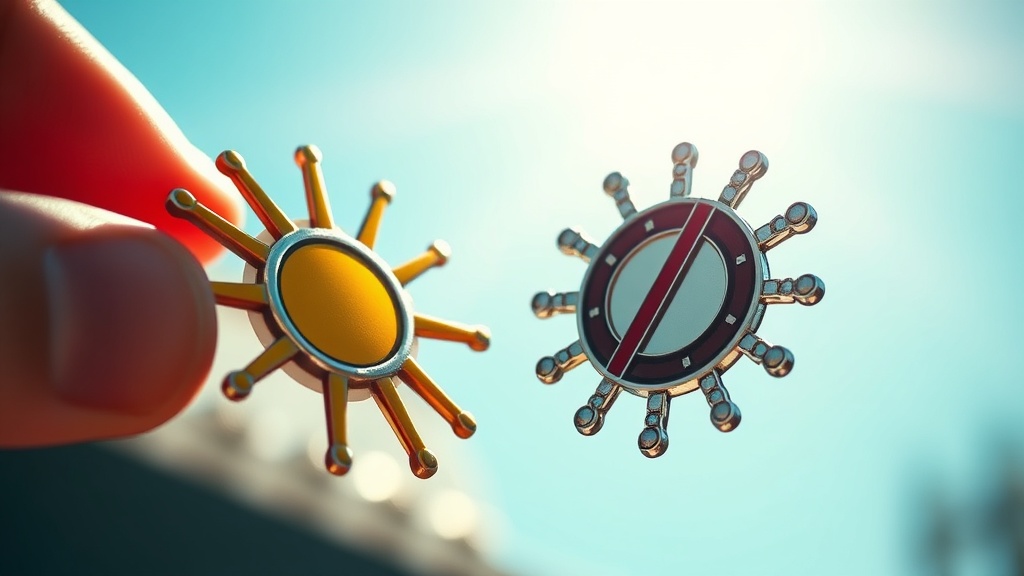
Avoid Sunlight Damage for Enamel Pins

Quick Tip
Keep your pin displays away from direct sunlight to prevent pigment degradation.
A single ray of morning sun hits a display case, turning a vibrant cobalt blue enamel pin into a dull, chalky gray. This isn't just a visual glitch; it's a permanent chemical change. UV radiation breaks down the pigments in the soft enamel and hard enamel used in modern collectibles, leading to fading and surface degradation. Protecting your collection from direct sunlight is the most effective way to prevent irreversible color loss.
How Does Sunlight Damage Enamel Pins?
Sunlight causes photo-oxidation, a chemical reaction that breaks down the molecular bonds in the pigment and the resin coating. When UV rays strike the surface, they can cause the colors to bleach or turn yellow—especially in lighter shades like pink or pale blue. It's not just the color that suffers, though. The heat from direct sun can also cause the metal backing to expand and contract, potentially loosening the pin clutches or even causing the enamel to crack.
If you've ever seen a vintage pin that looks "washed out," you're looking at the result of years of light exposure. It's a bummer to see a high-quality piece lose its luster. To understand the science of how light affects different materials, you might find the Wikipedia entry on photodegradation helpful for a deeper dive into the physics of light decay.
Where Should You Display Your Collection?
The best place to display your pins is in a room with controlled, indirect lighting or inside a UV-protected display case. Avoid placing your pin boards or shadow boxes directly across from a window. Even if the sun isn't hitting them directly, the ambient UV levels in a bright room can still cause gradual fading over time.
Here is a quick checklist for setting up a safe display:
- Use UV-Filtering Glass: If you use display cases, ensure the glass or acrylic is UV-resistant.
- Avoid Window Sills: Never display items on a windowsill or near a sun-drenched desk.
- Control Temperature: Keep displays away from radiators or heat vents to prevent thermal expansion.
- LED Lighting: Use LED-based display lights rather than old-school incandescent bulbs, which emit more heat and light-related stress.
I've learned the hard way that a "cool" display setup isn't worth much if the pieces inside are turning pale. If you're more interested in the structural side of things, check out my previous post on metal conservation for pin collectors. It's a different kind of damage, but the principle of preservation remains the same.
Can You Fix Faded Enamel Pins?
No, you cannot truly "fix" enamel that has been faded by UV light. Once the pigment has undergone a chemical change due to light exposure, it is a permanent state. You might be able to clean the surface to restore some shine, but the color loss is structural. This is why preventative care—like using UV-protected cases—is much better than trying to repair a damaged piece later.
| Storage Method | Risk Level | Effect on Enamel |
|---|---|---|
| Dark Drawer | Very Low | Minimal to zero risk. |
| Indirect Sunlight | Medium | Slow fading over several years. |
| Direct Sunlight | High | Rapid bleaching and surface cracking. |
Keep those pins out of the sun. Your future self (and your collection's value) will thank you.