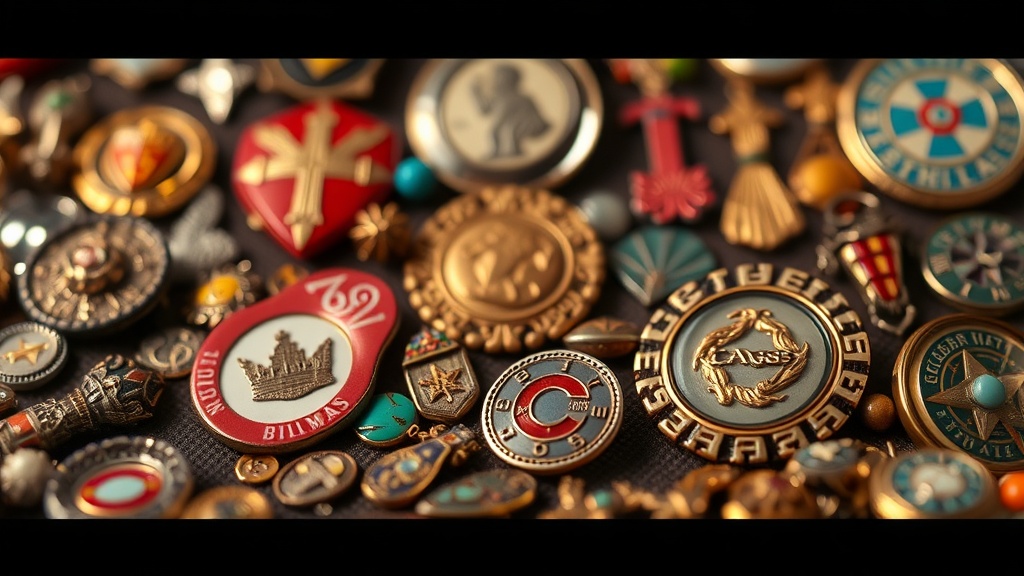
Guard Your Collection: Verifying Vintage Pin Authenticity

Guard Your Collection: Verifying Vintage Pin Authenticity
This guide will show you how to meticulously examine vintage pins for signs of authenticity, helping you distinguish genuine historical artifacts from clever modern reproductions. As collectors, our passion lies in the stories and craftsmanship embedded in each piece—and knowing your collection is truly legitimate brings a special kind of satisfaction, not to mention protecting your investment. Understanding the nuances of vintage pin construction, design, and provenance is key to building a collection you can truly trust.
The market for vintage collectibles, including enamel pins, is thriving, and with that popularity comes the unfortunate rise of fakes and reproductions. These aren’t always malicious—sometimes they’re simply tribute pieces, but they can easily mislead an unsuspecting buyer. Learning to identify these differences will save you both money and disappointment, ensuring every addition to your collection is a piece of history, not merely a cleverly aged trinket. We’ll look at everything from manufacturing methods to the subtle tells of natural wear, giving you the practical tools to become a more discerning collector.
What Manufacturing Clues Reveal About a Pin's Age?
When you hold a vintage pin, its construction method often whispers secrets about its true age. Early enamel pins, particularly those from the turn of the 20th century through the mid-century, frequently employed techniques like cloisonné and champlevé. Cloisonné involves delicate wire outlines soldered onto a metal base, with glass enamel powders then fired into the compartments. Champlevé is similar, but the metal itself is carved or etched to create recesses for the enamel. Both methods result in distinct, often slightly uneven surfaces and vibrant, deep colors that are hard to replicate perfectly with modern mass-production techniques.
Later vintage pins might use stamped metal bases with cold enamel or softer, more pliable enamels. Stamping creates a crisp, often shallower recess for the enamel. Look closely at the edges and the overall finish. Do the lines appear hand-finished or machine-perfect? Older pins often exhibit minor imperfections that hint at human involvement in their creation. Modern reproductions, by contrast, are frequently die-cast—a process that yields uniform, often heavier pieces with very clean, sharp lines that can sometimes feel *too* perfect for their supposed age.