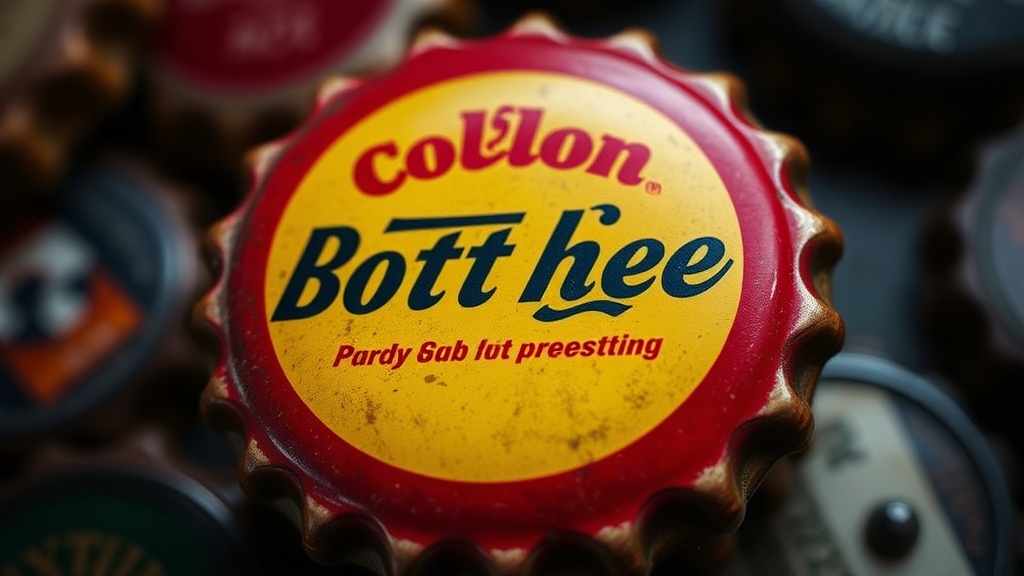
How to Clean Vintage Bottle Caps Without Damaging Their Value

Vintage bottle caps carry history in every dent and patina. Clean them wrong, and you'll strip away decades of character — not to mention collector value. This guide covers safe cleaning methods, what to avoid, and how to preserve the authenticity that makes old caps worth collecting. Whether you're sorting a recent estate find or maintaining a prized collection, these techniques protect your investment while keeping caps display-ready.
Can You Clean Old Bottle Caps Without Losing Value?
Yes — but the method matters more than you might think. Aggressive scrubbing, harsh chemicals, or attempts to "restore" a cap to mint condition often do more harm than good. Collectors prize original surfaces. Even rust, when authentic and stable, tells part of the story.
The bottle cap market — particularly for pre-1960s cork-lined crowns and early twist-offs — rewards originality over appearance. A 1930s Pepsi cap with honest wear commands more respect than one polished to a mirror finish. That said, surface grime, active corrosion, or sticky residues from old storage methods can accelerate deterioration. The goal isn't perfection. It's stabilization and gentle presentation.
Sage Andersson has seen too many new collectors reach for steel wool or vinegar soaks, only to discover their rare 1940s Bavarian Brewery cap now looks suspiciously new. The Portland collecting community learned these lessons through hard experience. Here's what actually works.
What Cleaning Supplies Do Bottle Cap Collectors Actually Need?
You don't need much. A basic kit keeps caps safe while handling routine cleaning jobs. Most collectors keep these supplies dedicated to their bottle cap work — cross-contamination from household cleaners causes more damage than you'd expect.
| Supply | Best For | Avoid Using On |
|---|---|---|
| Soft-bristled toothbrush (new) | Loose dirt, dust in crevices | Painted surfaces with flaking |
| Microfiber cloths | Gentle wiping, drying | Abrasive cleaning — they're too soft for scrubbing |
| Distilled water | Rinsing, light cleaning | Nothing — it's the safest base |
| Mild dish soap (Dawn Original) | Grease, fingerprints | Caps with paper labels or cork residue |
| Cotton swabs (Q-tips) | Precision work, edges | Large surface areas — too slow, too much handling |
| Plastic storage tubs (Rubbermaid) | Soaking, organizing by cleaning stage | Long-term storage — use archival materials instead |
| Desiccant packets (Silica Gel) | Controlling humidity post-cleaning | Nothing — they're preventive, not cleaning tools |
Here's the thing: buy cheap toothbrushes in bulk. Dollar Tree sells packs of six. Once a brush touches metal residue or questionable cleaning solution, retire it. Don't risk transferring contaminants to your next batch of caps.
Some collectors swear by ultrasonic cleaners for bulk work. The Magnasonic MGUC500 handles small batches well — think twenty to thirty standard crowns at once. The catch? Never add cleaning solution stronger than a drop of mild soap. Ultrasonic vibration drives chemicals into microscopic crevices you can't rinse out. That "improved" cap might develop white bloom six months later.
How Do You Remove Rust from Vintage Bottle Caps Safely?
Light surface rust responds to patient mechanical removal. Deeper corrosion requires accepting it as part of the cap's history — or passing on the piece entirely. Attempting to eliminate all rust typically destroys the underlying finish.
Start dry. A soft toothbrush — dry, no water — lifts loose oxidation without introducing moisture to the problem. Work over white paper so you can see what you're removing. If the rust powder wipes away and reveals stable metal beneath, stop there. Stable patina protects what's underneath.
For active, flaky rust that threatens the cap's integrity, a controlled approach works better. Mix a paste of baking soda and distilled water — toothpaste consistency. Apply with a cotton swab, wait five minutes, then gently wipe away with a damp microfiber cloth. The mild alkalinity neutralizes oxidation without attacking the base metal. Rinse with distilled water. Pat completely dry immediately.
That said, some rust won't budge without aggressive measures — and that's your signal to stop. Naval Jelly, vinegar soaks, or electrolysis might clean the metal, but they'll obliterate any remaining paint, lithography, or factory finish. A rust-free blank disk has zero collector appeal.
"The best cleaning job is the one you barely notice. If a cap looks 'restored,' you've gone too far." — Pacific Northwest Bottle Cap Collectors Association
When Rust Is Actually Worth Keeping
Certain collectors seek out "dug" caps with honest earth patina — particularly for historic bottles tied to specific sites. A cap recovered from a 1920s landfill carries archaeological significance. Cleaning it to sparkle-finish destroys its provenance. Document the find location, photograph the as-found condition, and consider leaving well enough alone.
What's the Best Way to Clean Painted or Lithographed Bottle Caps?
Painted surfaces demand the gentlest treatment. Water — even distilled — can lift poorly adhered paint or cause underlying rust to bloom. Start with compressed air (the Dust-Off DPSXL works) to remove loose debris without contact.
If washing becomes necessary, support the cap from beneath. Don't grip the edges while scrubbing — finger pressure concentrates force and can crack aged paint. Use a soft foam block (craft stores sell them for stamping) as a backing pad. Work in cool conditions; heat accelerates chemical reactions you can't control.
Worth noting: many pre-1950s caps used lead-based paints. Wear nitrile gloves. Work with ventilation. Don't eat or smoke while handling uncleaned material. The historical value doesn't justify lead exposure.
For caps with intact cork liners — rare survivors from the 1890s through 1950s — the cleaning approach changes entirely. The cork itself often holds more value than the metal crown. Don't submerge. Surface-wipe only, and consider leaving the liner undisturbed. A dirty cap with original cork beats a clean cap with dissolved fiber filling.
What Are the Most Common Bottle Cap Cleaning Mistakes?
New collectors repeat the same errors. Most stem from impatience or assumptions drawn from other collecting fields.
- Tumbling with media. Rock tumblers and rotary tools — even with "gentle" corn cob media — round edges and wear away fine detail. They also work-harden metal, making future dents more likely.
- Olive oil "preservation." Food oils turn rancid. They attract dust. They oxidize and gum up. Never apply organic oils to metal collectibles. If you must protect a surface, conservation-grade microcrystalline wax (Renaissance Wax) is the only acceptable option — and even that's controversial among serious collectors.
- Bleach solutions. Chlorine compounds attack metal at the molecular level. That "brightened" cap will develop structural weakness and odd coloration within months.
- Power tools with wire brushes. Just don't. The speed and abrasion strips history in seconds. What takes fifty years to develop disappears in five seconds of Dremel work.
- Removing "damage" that's actually factory character. Uneven crimping, tooling marks, slight color variations — these distinguish genuine vintage caps from reproductions. Cleaning should reveal character, not manufacture uniformity.
The Portland bottle cap scene shares horror stories at every meetup. One collector's "restored" 1950s Coca-Cola cap — stripped to bare metal and repainted with model enamel — still gets brought up as cautionary example years later. The work was skilled. The result was worthless.
Document Before You Clean
Photograph every cap before starting treatment. Multiple angles, good lighting, macro detail of problem areas. If your cleaning goes wrong — or if you simply want to track how your techniques evolve — you'll have reference. Some collectors maintain cleaning logs: date, method, before/after shots. It's not obsessive. It's how you get better.
How Should You Store Bottle Caps After Cleaning?
Proper storage matters as much as cleaning technique. All that careful work means nothing if caps go back into damp cardboard or reactive plastic.
Let caps rest for 48 hours after any moisture exposure. Even "dry" cleaning methods leave trace humidity. Store them in a climate-stable environment — between 60-70°F with relative humidity under 50%. The Pacific Northwest's damp climate makes this challenging; silica gel packets in sealed containers become non-negotiable here.
For display, archival-quality polyethylene pages (like those from Gaylord Archival) allow viewing without handling. PVC-free is mandatory — standard vinyl sleeves off-gas plasticizers that attack metal over time. The same rule applies to storage boxes: acid-free cardboard or inert plastics only.
Handle cleaned caps by the edges only. Finger oils restart corrosion. If you're doing a batch cleaning session, keep a rotation going — clean some, photograph some, store some — rather than handling wet caps repeatedly.
There's no single "right" way to clean vintage bottle caps. Condition, era, material, and your own collecting goals all factor in. Start conservative. Document everything. Learn from each piece. The caps survived decades to reach you — with care, they'll outlast your collection too.
Steps
- 1
Assess the Condition and Value of Your Bottle Caps
- 2
Gather Gentle Cleaning Supplies and Tools
- 3
Clean, Dry, and Store Your Caps Properly