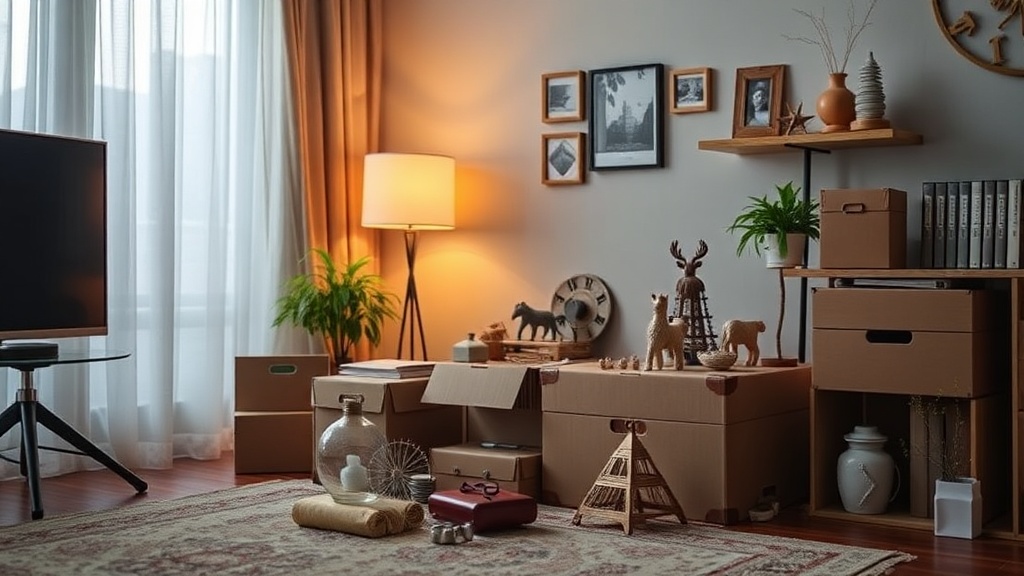
How to Pack Your Small Collectibles for a Move Without Professional Help

What supplies do you actually need?
Most collectors assume professional movers possess some magic touch—that their supplies are somehow superior to what you can source yourself. That's nonsense. The materials protecting your bottles, medals, and pins during transit are exactly the same whether you pay a premium service or handle it yourself. The difference lies in attention to detail (and the time you're willing to spend).
Start with acid-free tissue paper—not the cheap stuff from the supermarket, but unbuffered, archival-quality sheets. You can find these at craft stores or order from conservation supply houses like University Products. For glass bottles, you'll want bubble wrap with 3/8-inch bubbles (larger bubbles create too much empty space; smaller ones don't absorb enough shock). Don't buy the off-gassing PVC wrap—look for polyethylene.
Boxes matter more than you'd think. New boxes are worth the cost for collectibles. Used boxes have lost structural integrity, and you can't afford a collapsed corner when it contains a 1920s cobalt bottle. Get double-walled corrugated boxes in various sizes. Small boxes are your friend—yes, you'll use more of them, but a small box full of brass medals quickly becomes heavy. You want manageable weight that won't strain the bottom seam.
You'll also need archival-quality polyethylene foam pouches (not foam peanuts—they shift and settle), acid-free cardboard dividers for separating items, and a good permanent marker. Skip the tape guns for now; you'll need painter's tape for securing wrapping (it doesn't leave residue) and packing tape for sealing boxes.
How do you protect fragile glass bottles?
Glass bottles—whether they're antique medicine bottles, vintage soda bottles, or decorative flacons—share one trait: they're unforgiving. Drop a medal and you might dent it. Drop a bottle and you've got shards. The key is immobilization. A wrapped bottle should not move. At all. Inside its individual wrapping, inside its box, inside the larger container—everything should fit snugly.
Begin by removing any caps or closures. Store these separately in labeled polyethylene bags. Caps can corrode or scratch glass during transport, and they're often made of different materials with different expansion rates. Clean the bottle interior if possible—residual moisture causes problems you won't notice until unpacking months later.
Wrapping techniques that actually work
Wrap each bottle individually in acid-free tissue first. This prevents the bubble wrap from leaving impressions on soft glass or painted labels. Then add a layer of bubble wrap, secured with painter's tape. The tape should touch only the bubble wrap, never the bottle itself.
Place wrapped bottles in small boxes with crumpled acid-free paper filling any voids. Don't use newspaper—the ink transfers. Don't use regular tissue—it tears. Each small box gets labeled "FRAGILE—GLASS—THIS SIDE UP" on multiple sides. Then—and this is where amateurs slip—place those small boxes inside a larger double-walled box with at least two inches of cushioning between the inner boxes and outer walls. The double-box method is standard practice at museums for a reason.
Choosing the right containers
For particularly valuable or irreplaceable bottles, consider investing in archival storage boxes from suppliers like Gaylord Archival. These aren't cheap, but neither is replacing a cracked poison bottle from the 1890s. The boxes are pH-neutral, lignin-free, and designed specifically for museum collections.
If you're using standard moving boxes, reinforce the bottom with the H-tape method—tape along the center seam and across both ends. A single strip down the middle isn't enough. Test your box by lifting it empty; if it flexes noticeably, it's not sturdy enough for glass.
What's the safest way to transport medal and pin collections?
Medals and pins present different challenges than bottles. They're smaller, often sharp, and prone to scratching each other. They're also—ironically—easier to lose. A dropped box of bottles makes noise. A dropped envelope of pins scatters silently into corners you'll never check.
Keep sets together. If you have a campaign medal group with original ribbons and miniatures, they travel as a unit. Separate them and you risk mixing them with other lots, or worse—losing components. For medals with delicate finishes, use polyethylene foam sheets between each piece. For pins with sharp posts, pierce them through acid-free cardboard (think old-school ribbon style) then cover the back with another foam sheet.
Never—seriously, never—put loose pins in plastic bags together. They'll scratch each other beyond recognition. They'll tangle. The clutch backs will come off and scratch the enamel. Each pin deserves individual attention, or at minimum, separation by foam dividers.
For significant collections, consider keeping the most valuable pieces with you rather than on the moving truck. A flat storage box that fits under your car seat or in a carry-on bag means you maintain custody. The rest of your collection can travel with the movers, but your top ten percent stays within arm's reach. This isn't paranoia; it's standard risk management.
How should you document everything before you seal the boxes?
Here's a truth that separates serious collectors from hobbyists: inventory matters. Not just for insurance (though your agent will thank you), but for your own sanity. You will not remember which box contains the WWI Victory Medal with the original box. You think you will. You won't. Especially not three weeks into unpacking when you're sleep-deprived and surrounded by cardboard.
Photograph each item—or each small group—before packing. Note the box number on the photo. Create a simple spreadsheet: Box 1 contains items A, B, C. Box 2 contains D, E, F. Be specific. " medals" isn't helpful. "Three British campaign medals, 1914-15 Star pair, in original shipping box" is helpful. Save this inventory to the cloud (and email it to yourself) before moving day. If the physical list disappears, you've got backup.
Label boxes on multiple sides. Write "FRAGILE" clearly, but also include handling instructions: "THIS SIDE UP" matters for bottles with contents, medals with loose suspension rings, or anything with moving parts. Movers aren't mind readers. They're also not collectors. What seems obvious to you—"don't stack heavy boxes on the one labeled pins"—won't occur to someone paid by the hour to clear the truck quickly.
For truly valuable pieces, consider additional insurance riders. Standard moving insurance pays by weight (absurd for collectibles) or offers depreciated value. Documented, photographed, appraised items can be insured for agreed value. Organizations like the American Collectors Association offer resources on proper valuation and insurance options specific to collectibles.
What should you watch for when unpacking?
The danger doesn't end when the truck pulls away. In fact, unpacking poses its own risks—rushed handling, tired judgment, and the temptation to "just get it done." Resist. Unpack your collectibles when you're fresh, in good light, with a clear workspace. Don't try to unwrap bottles while standing over a tile floor. One fumble and that bottle you've been hunting for three years becomes a puzzle of fragments.
Check each item against your inventory as you unpack. Not because movers stole anything—they probably didn't—but because things shift, boxes crush, and you'll want to document any damage immediately. Photograph any issues before moving the item. Insurance claims need evidence, and evidence needs timestamps.
Don't immediately return items to display. Let glass and metal adjust to the new environment first. Temperature and humidity changes—especially if you've moved to a different climate—can cause condensation or metal expansion. Give everything 24 hours in a stable environment before unwrapping completely. This patience feels excessive until you watch a cold bottle sweat the moment you remove its protective wrapping.
Finally, save your packing materials. Flatten and store the acid-free tissue, the bubble wrap, the boxes. You'll need them again—for the next move, for trading with other collectors, or for shipping that piece you finally decided to sell. Quality packing materials aren't single-use consumables. They're tools, and tools get stored properly.