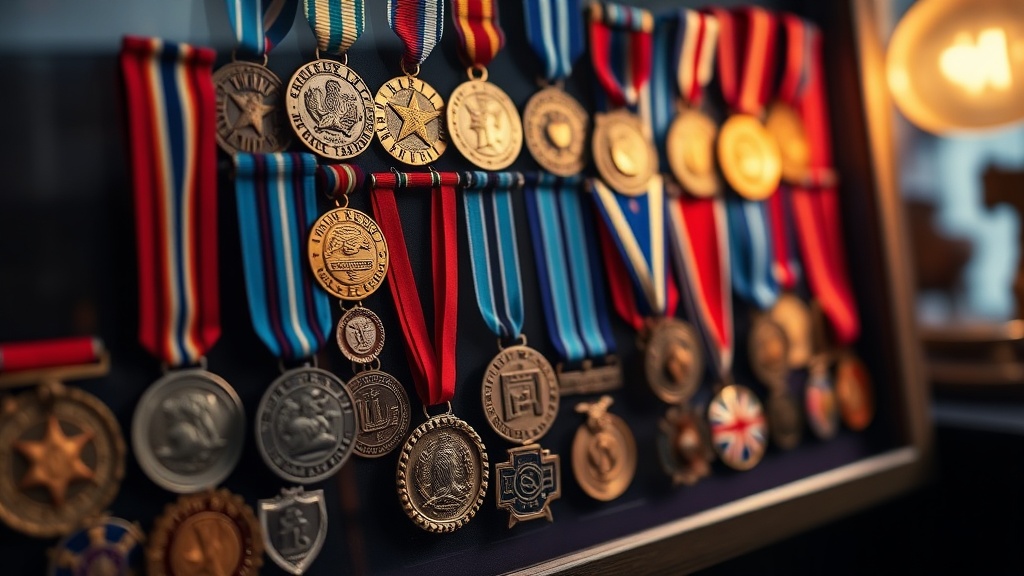
How to Store, Display & Protect Your Medal and Pin Collection

This guide covers practical, proven methods for storing, displaying, and protecting medals and pins—whether the collection spans five pieces or five hundred. Without the right approach, enamel fades, ribbons fray, and metal tarnishes faster than most collectors realize. You'll learn how to organize pieces safely, show them off without risk, and buy supplies that actually work.
What's the Best Way to Store Medals and Pins Long-Term?
The best long-term storage method depends on the collection's size, value, and how often pieces are handled. For most collectors, archival-quality containers with acid-free materials beat shoeboxes and Ziploc bags every time.
Medals and pins are surprisingly fragile. Ribbon bars dry out. Plated metals oxidize. Enamel chips if pieces rattle against each other. That said, separation and climate control matter more than fancy branding.
For pins: Individual Ultra-PRO 2x2 pin flips or polyethylene baggies inside compartmented trays keep pieces from scratching. Avoid PVC—it's the soft, cloudy plastic that smells like a beach ball. PVC off-gasses hydrochloric acid over time, which etches metal and turns ribbons yellow.
For medals: Lay them flat in BCW archival storage boxes with acid-free tissue between layers. Hanging medals by their ribbons looks nice on a wall, but gravity stretches fabric and weakens stitching over decades.
Here's the thing—climate matters as much as containers. Store collections in a stable environment: 65–70°F with 35–45% relative humidity. Basements flood. Attics bake. A closet inside the main living area is usually the safest bet.
| Storage Method | Best For | Pros | Cons |
|---|---|---|---|
| BCW Archival Boxes + Acid-Free Tissue | Large medal collections | Affordable, stackable, protects from light | Not display-friendly; requires flat storage space |
| Ultra-PRO Pin Flips in Binder Pages | Trading pins, lapel pins | Easy to browse, compact, portable | Binders can get heavy; pages may sag |
| Riker Mounts with Glass Top | Display + storage combo | Looks professional, keeps dust out | Heavier; glass can break if dropped |
| Compartmented Coin/Pin Trays | High-volume pin collectors | Quick access, organized layout | Exposed to air and light unless covered |
Worth noting: never store medals or pins in direct contact with wood. Wooden drawers and cigar boxes contain lignin and tannins that stain metal and fabric. If a wooden display case is unavoidable, line it with acid-free mat board or unbleached cotton first.
How Should You Display a Medal and Pin Collection Without Damaging It?
Display collections away from direct sunlight, heat sources, and high-traffic areas where accidental bumps are likely. UV light is the silent killer of ribbons and enamel—it fades colors in months, not years.
Shadow boxes remain the most popular display choice. Michaels' Gallery Wall Shadow Boxes work well for beginners, though serious collectors often upgrade to custom frames with museum glass. Museum glass blocks 99% of UV rays and reduces glare, which makes details easier to see.
The catch? Framed medals shouldn't dangle from their ribbons. Stitch or pin the ribbon to a fabric backing, then support the medal itself with a small archival mount or acid-free foam block. This distributes weight and prevents the ribbon from tearing at the fold.
For pin boards, felt-backed cork or linen-covered foam boards are common. Pacific Arc makes sturdy glass-front display cases with fabric backings that work well for themed sets—military pins, Olympic pins, or Disney trading pin collections. Lockable cases are smart if the collection has any resale value or if children visit often.
Wall placement matters. Avoid exterior walls (temperature swings) and bathrooms (humidity spikes). Interior walls, hung at eye level, provide the most stable environment. If a piece is particularly rare—say, a Civil War campaign medal or a hard-enamel convention pin—rotate it into storage for a few months each year. Light exposure adds up, even under museum glass.
What Supplies Do You Need to Protect Pins and Medals from Tarnish?
At minimum, collectors should keep silica gel packets, anti-tarnish strips, acid-free tissue, and a soft microfiber cloth on hand. These four items prevent 90% of the damage that plagues neglected collections.
Silver and silver-plated medals tarnish when exposed to sulfur in the air. Anti-tarnish strips (often made by 3M or Pacific Silvercloth) absorb sulfur compounds and fit neatly inside storage boxes. Replace them every six months in humid climates, or annually in drier regions like the Pacific Northwest.
Silica gel controls moisture. Rechargeable canisters—such as those from Eva-Dry—are safer than loose packets that might burst. Keep the relative humidity around 40%. Too dry, and leather medal cases crack. Too damp, and bronze disease (a powdery green corrosion) sets in.
For cleaning, less is more. A dry microfiber cloth removes fingerprints and light dust. Never use brass polish, silver dips, or jewelry cleaners on plated medals or enameled pins. These products strip plating and dissolve paint. If a medal has caked-on grime, a soft natural-hair brush (like a Winsor & Newton Series 7 watercolor brush) can tease dirt out of crevices without scratching.
Here's the thing about gloves: cotton gloves are fine for medals, but they can snag on sharp pin posts. Nitrile gloves work better for handling pins with clutch backs or long posts. Bare fingers are actually acceptable if hands are washed and completely dry—oils cause tarnish, but fresh water and soap remove them.
Recommended Supply Checklist
- Storage: BCW archival boxes, Ultra-PRO pin flips, or Riker mounts
- Climate control: Eva-Dry rechargeable dehumidifier, silica gel canisters
- Tarnish prevention: Pacific Silvercloth anti-tarnish strips
- Handling: Nitrile gloves or freshly washed hands
- Cleaning: Microfiber cloths, natural-hair brushes, distilled water (for stubborn spots only)
- Display: Museum glass frames, UV-filtering acrylic, or lockable Pacific Arc cases
How Do You Clean and Maintain Medal and Pin Collections?
Routine maintenance means inspecting pieces every three to six months, checking for tarnish, loose pin posts, frayed ribbons, or insect damage. Catching problems early saves pieces that would otherwise be ruined.
Start with a well-lit table and a clean surface. Lay out one box or tray at a time. Look for white dust on bronze (bronze disease), black spots on silver (tarnish), or sticky residue on enamel (often from old adhesive or tape). If a ribbon smells musty, isolate it immediately—mold spreads.
For medals with fabric components, never immerse the ribbon in water. Instead, spot-clean the metal with a barely damp cotton swab (distilled water only) and dry it instantly with a soft cloth. If the ribbon itself is stained, consult a textile conservator. Home remedies like vinegar or baking soda destroy dyes.
Pins require a different approach. Soak the metal back in a shallow dish of warm water and mild dish soap (Dawn Original works) for two minutes, then brush gently with a soft toothbrush. Rinse, pat dry with a lint-free cloth, and let the pin air-dry completely before storing. Never soak enamel faces—water can seep under the metal rim and lift the paint.
"Prevention is the only conservation strategy most collectors can afford. Once a ribbon is sun-bleached or a pin's plating is worn through, the damage is permanent."
— Smithsonian Museum Conservation Institute
That said, documentation is part of maintenance, too. Photograph each piece, note provenance, and keep a simple spreadsheet or catalog app. If disaster strikes—a house fire, a burst pipe, a theft—a photo inventory is the difference between a total loss and an insurance claim.
Rotate displays. Keep the rarest pieces in the dark most of the year. Update silica gel and anti-tarnish strips on a schedule. And resist the urge to over-handle. The best collections are the ones that are seen, admired, and then put safely back to sleep.