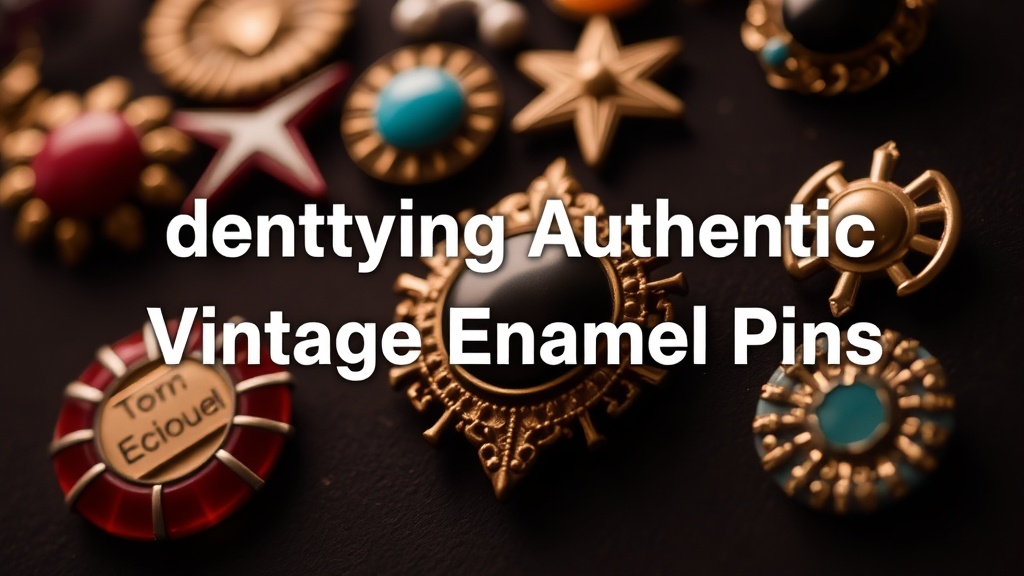
Identifying Authentic Vintage Enamel Pins

This guide covers the specific physical markers, material compositions, and manufacturing techniques used to distinguish authentic vintage enamel pins from modern reproductions and cheap fakes. You'll learn how to inspect metal alloys, identify different types of enamel application, and recognize the hallmarks of mid-century production. Understanding these details helps you protect your investment when buying at estate sales or online auctions.
What are the main differences between soft and hard enamel?
The primary difference lies in the surface texture and the way the color is applied to the metal base. Hard enamel, often called cloisonné, features a smooth, polished surface where the enamel is filled into recessed areas and then ground down until it's level with the metal lines. It feels like a single, seamless piece of glass-like material.
Soft enamel is much more common in modern, low-cost production. It leaves a distinct "recessed" feel where you can run your finger over the metal ridges and feel the dips in the color. The surface isn't perfectly flat, and the metal lines act as physical borders for the paint.
Here is a breakdown of the two styles:
| Feature | Hard Enamel (Cloisonné) | Soft Enamel |
|---|---|---|
| Surface Texture | Smooth, flat, and polished. | Recessed, textured, and uneven. |
| Visual Depth | High gloss; looks like glass. | Matte or semi-gloss; looks like paint. |
| Durability | Very high; resistant to scratches. | Moderate; prone to chipping or fading. |
| Common Use | High-end vintage, jewelry, military. | Modern lapel pins, promotional items. |
If you're looking at a piece that claims to be a high-end vintage collectible, look for that flat, glass-like finish. If it feels bumpy or "dipped," it's likely a modern soft enamel piece. Don't be fooled by high-gloss coatings on modern pins—true hard enamel has a structural smoothness that a top-coat can't quite mimic.
How can you tell if a pin is truly vintage?
You can identify a truly vintage pin by examining the metal's patina, the pin back mechanism, and the presence of maker's marks. Modern pins often use shiny, bright brass or nickel-plated steel that looks brand new even after a few years. Vintage pieces—especially those from the mid-20th century—will show natural signs of aging.
First, look at the metal color. Real vintage brass has a deeper, warmer, and slightly duller tone than the bright, yellow-gold of modern plating. If the metal looks almost "too perfect" or unnaturally bright, it's a red flag. Check the edges for slight imperfections or "softness" that comes from older casting methods.
Next, inspect the pin attachment. Before the widespread use of the butterfly clutch, many vintage pins used different fastening systems. You might see a simple "c-clasp" or a rubber-tipped post. If you see a modern butterfly clutch—the kind with the tiny spring-loaded wings—it doesn't necessarily mean the pin is fake, but it's a sign the pin might have been refurbished or is a modern production. (Many collectors actually swap these out themselves, so take it with a grain of salt.)
The most reliable way to verify age is to look for a hallmark or a manufacturer's stamp. Authentic vintage brands like enamel specialists or military suppliers often stamped their names or a small symbol into the metal. Modern mass-produced pins rarely have these marks, or if they do, they are often laser-etched rather than struck into the metal.
A few things to look for regarding age:
- The Metal Weight: Vintage pins often feel heavier and more substantial due to the metals used in older casting processes.
- Oxidation: Look for a slight darkening in the crevices of the metal. This is natural oxidation.
- The Backing: A plain, unbranded metal pin back is more common on older pieces than the colorful plastic ones seen today.
Is the pin made of gold or just gold-colored?
To determine if a pin is made of precious metal, you must look for official hallmarks and perform a basic weight and color test. Most "gold" pins found in vintage collections are actually gold-plated brass or bronze, not solid gold. However, high-end vintage jewelry pins from the early 1900s can indeed be solid gold.
Check the back of the pin for tiny numbers or symbols. If you see "14K," "18K," or "925," the piece is likely made of gold or sterling silver. If you see "GP" (Gold Plated), "GF" (Gold Filled), or "RGP" (Rolled Gold Plate), it's a plated item. This is standard for most collectible pins, including those from brands like the Smithsonian collections or high-end estate jewelry.
The weight is a huge giveaway. Gold is incredibly dense. If a pin looks like it's solid gold but feels light or "tinny" when you tap it against a hard surface, it's almost certainly a plated base metal. A real gold piece will have a certain "heft" that modern cheap alloys just can't replicate.
Here’s a quick checklist for metal identification:
- Visual Inspection: Does the color look uniform? Plated pins often show wear on the edges where the base metal (like copper or brass) peeks through.
- The Magnet Test: Most gold and silver are non-magnetic. If a strong magnet sticks to the pin, it's a base metal like iron or steel. (Note: some stainless steel is also non-magnetic, so this isn't 100% foolproof.)
- Hallmark Search: Use a jeweler's loupe to find tiny stamps. Even a tiny "1/10 12K GF" tells you it's gold-filled, not solid.
Don't be disappointed if your "gold" pin turns out to be gold-filled. Most of the history in the collecting world is found in these high-quality plated pieces. The value is in the design and the era, not just the metal content.
One thing to watch out for is "faux" vintage. This is when a modern company intentionally makes a pin look old by adding a fake patina or using distressed metals. These are common in the "boutique" pin community. If the "wear" looks too consistent or symmetrical, it's likely a manufactured look rather than actual age-related decay.
If you're ever in doubt, check the Library of Congress digital collections or similar historical archives. Many vintage pins were produced for specific historical events, and seeing a high-resolution scan of an original can confirm if the design matches the era you're investigating.
When you're out at an antique mall or browsing an online shop, take your time. Don't rush the process. A single glance isn't enough to catch a clever reproduction. Use a bright light to see the enamel texture and a magnifying glass to hunt for those tiny, hidden hallmarks. That's how you build a collection that actually holds its value.