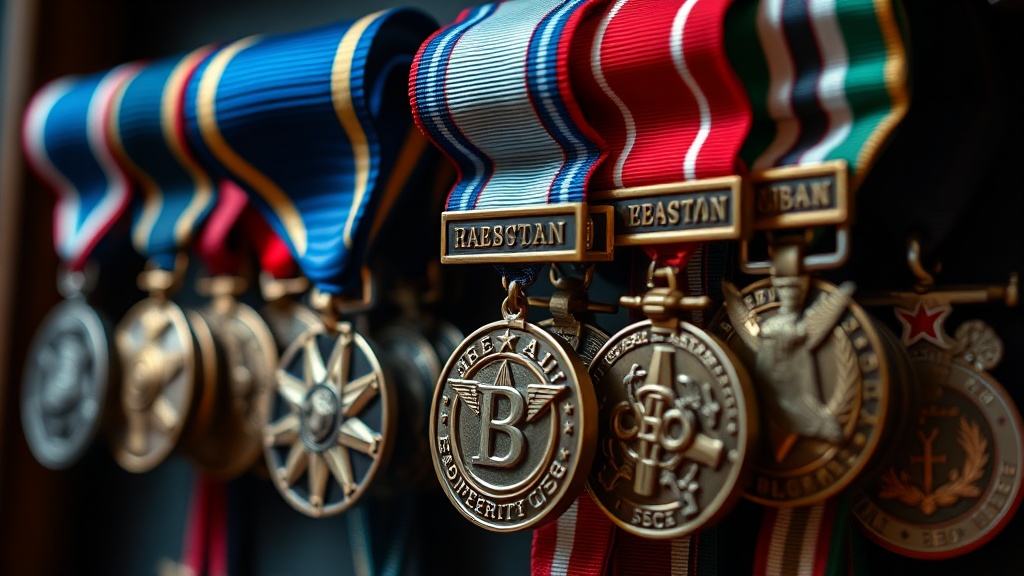
The Right Way to Store Military Medals Without Damaging Ribbons

Quick Tip
Always store medals in acid-free boxes away from direct sunlight and humidity to prevent ribbon fading and metal oxidation.
This post breaks down proper military medal storage techniques that prevent ribbon fading, metal tarnish, and fabric deterioration. Medals represent service and history—damaged ribbons can't be replaced, and improper storage leads to irreversible corrosion. Whether you've inherited a grandfather's WWII collection or you're safeguarding your own decorations, these methods will keep them pristine for decades.
What's the Best Way to Store Military Medals Long-Term?
The safest approach combines acid-free materials with controlled humidity. Military medals need breathable storage—not airtight plastic containers that trap moisture.
Here's the thing: ribbon bars are surprisingly fragile. Silk, cotton, and synthetic fabrics used in military decorations break down when exposed to light, humidity, and acidic materials. The National Archives recommends archival-quality storage for all textile-backed medals.
Start with these fundamentals:
- Use acid-free boxes or trays—Gaylord Archival and Hollinger Metal Edge make museum-grade options specifically for medals
- Layer acid-free tissue between stacked pieces to prevent metal-to-fabric contact
- Maintain relative humidity between 30-50% (monitor with a basic hygrometer)
- Store away from direct sunlight and heat sources—closets beat attics every time
That said, don't overthink temperature. Normal household conditions work fine. The danger comes from extremes—garages, basements with moisture issues, or display cases in sunny rooms.
Should You Display Medals or Keep Them Stored?
Rotation is the practical answer—display a selection, store the rest safely.
Many collectors want to show their medals. That's understandable. The catch? Display cases expose ribbons to UV damage and airborne pollutants. If you choose to display, use cases with UV-filtering glass (Museum Glass or Tru Vue Conservation Clear). Shadow boxes from Michaels work, but replace the standard backing board with acid-free mat board.
Worth noting: never pin medals directly into standard foam backing. The acids in cheap foam board leach into ribbons over time. Instead, mount medals using conservation-grade polyethylene straps or cotton twill tape.
| Storage Method | Best For | Cost Range | Ribbon Risk Level |
|---|---|---|---|
| Acid-free medal box | Long-term preservation | $25-60 | Minimal |
| UV-filtering shadow box | Active display | $40-120 | Low (with proper glass) |
| Original issue boxes | Vintage presentation | $0 (if kept) | Moderate (check interior materials) |
| Plastic storage case | Transport only | $10-20 | High (traps moisture) |
How Do You Clean Medals Without Damaging Ribbons?
You don't—at least not the ribbons. Professional conservators separate medals from ribbons before any cleaning.
Metal portions can be gently wiped with a soft cotton cloth. For tarnished silver or bronze, Smithsonian Museum Conservation Institute recommends professional conservation services rather than DIY polishing. Harsh chemical dips strip patina and can seep into ribbon attachments.
If ribbons show dust or surface dirt, use a soft brush (camel hair or sable) with no moisture. Never apply cleaning products to fabric. Stains on vintage ribbons are permanent—attempting removal usually causes more damage than the stain itself.
Proper storage isn't complicated. It's about consistent conditions and quality materials. A $40 archival box from Light Impressions or University Products protects thousands of dollars in irreplaceable history. That's not just practical—it's respect for what these decorations represent.