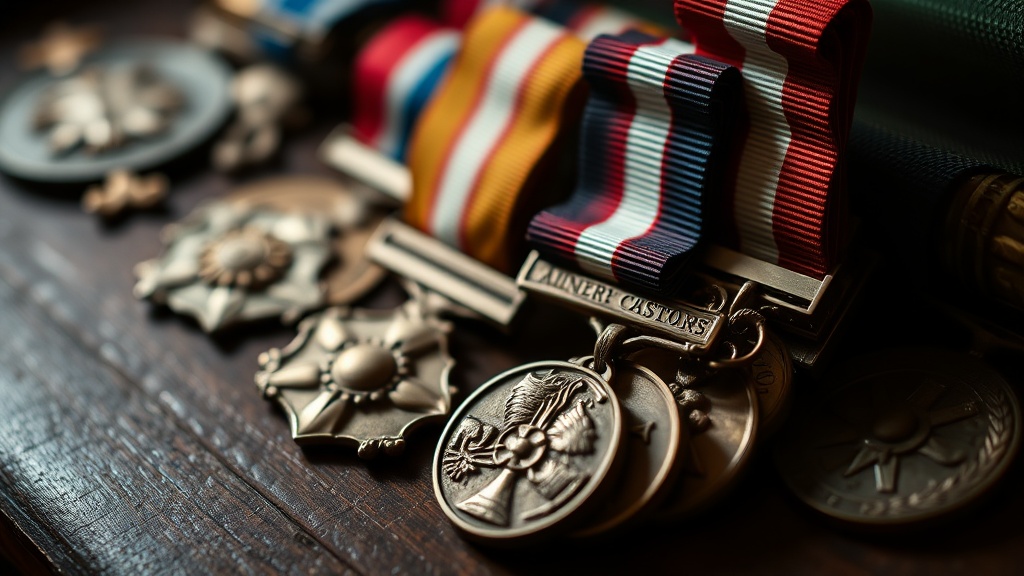
Vintage Military Medals: A Collector's Guide to Valuable Finds

Vintage military medals represent one of the most fascinating corners of the collectibles market—combining history, craftsmanship, and scarcity in small, wearable artifacts. This guide covers what makes certain medals valuable, how to spot authentic pieces versus reproductions, and where serious collectors find the best deals. Whether you're hunting for Civil War campaign medals at estate sales or tracking down British Victoria Crosses at auction, understanding grading, provenance, and market trends will save money and prevent costly mistakes.
What Makes a Military Medal Valuable to Collectors?
Value comes down to four factors: rarity, condition, historical significance, and the story behind the piece. A common World War II Victory Medal might sell for $15 at a flea market. The same medal awarded to a specific soldier with documented combat action? That changes everything.
Scarcity drives the top end of the market. The Medal of Honor—America's highest military decoration—has been awarded only 3,525 times since 1863. Most recipients or their families keep these medals forever. When one does surface (legally—there are strict laws about buying and selling Congressional Medals of Honor), prices can exceed $300,000 at reputable auction houses like Heritage Auctions.
Condition matters enormously. Collectors use standardized grading: Mint State (MS) for pristine pieces, Extremely Fine (XF), Very Fine (VF), and downward. A Napoleonic-era Légion d'honneur in XF condition might command $2,000. The same medal with wear, replaced ribbons, or cleaned surfaces? Maybe $400.
Documentation separates hobbyists from serious collectors. Medals with original award certificates, service records, or "named" engravings (the recipient's name officially inscribed) carry premiums of 50-300% over unattributed examples. The paperwork proves authenticity—and gives the medal a human story.
Which Vintage Military Medals Are Worth the Most Money?
The most valuable medals typically fall into three categories: highest decorations for valor, campaign medals from specific conflicts, and foreign awards to Allied soldiers.
American collectors chase the Medal of Honor (all branches), Navy Cross, Distinguished Service Cross, and Air Force Cross. Early Purple Hearts—especially those from World War I or with Bullion embroidery—regularly sell for $1,500-$5,000. The Order of the Purple Heart (military society membership medals from the 1930s-40s) are different pieces entirely—worth $50-$200 depending on variant.
British medals dominate international markets. The Victoria Cross (VC) remains the holy grail—only 1,358 awarded since 1856. Recent sales at Sotheby's have topped £1 million for VCs with exceptional provenance. The George Cross (civilian equivalent) and Distinguished Conduct Medal also command strong prices.
German World War I and pre-1918 imperial decorations—Pour le Mérite (the "Blue Max"), Iron Cross 1st Class with oak leaves and swords, Order of the Red Eagle—have dedicated collectors worldwide. Here's the thing: World War II German decorations occupy a complicated space. Many are legal to own; some (SS-specific awards) are banned or restricted in several European countries. Research local laws before buying.
| Medal | Era/Country | Typical Range (USD) | Notes |
|---|---|---|---|
| Medal of Honor (Army/Navy) | 1863-present, USA | $150,000-$500,000+ | Illegal to sell in many cases; auction rare |
| Victoria Cross | 1856-present, UK | $250,000-$1,500,000 | Bronze, not gold; cast from Russian cannon |
| Pour le Mérite | 1740-1918, Prussia/Germany | $8,000-$50,000 | Blue enamel; "Blue Max" nickname |
| Iron Cross 1st Class | 1813-1945, Germany | $50-$400 | WWII versions common; WWI worth more |
| Purple Heart | 1932-present, USA | $50-$5,000 | WWII Bullion versions command premium |
| 1914-15 Star | WWI, British Empire | $30-$150 | Common; trio sets worth more |
How Can You Tell if a Military Medal Is Authentic?
Reproductions flood the market. Some are innocent replicas sold as "reproduction" or "copy." Others are deliberate fakes designed to deceive. Knowing the difference protects your wallet.
Start with weight and materials. Authentic British campaign medals from the Victorian era through World War I were struck in silver or bronze of specific compositions. A "silver" medal that sticks to a magnet? That's a problem. Original Iron Crosses have distinct iron cores with silver or blackened frames—reproductions often use cheap pot metal.
Examine the striking quality. Genuine medals from major mints (the Royal Mint, U.S. Mint, Paris Mint) show sharp details, consistent lettering, and proper relief. Fakes often look "mushy"—soft details, uneven rims, or misspelled inscriptions. Compare against reference books or museum specimens.
Ribbons matter more than you'd think. Original World War II American campaign medals came with specific rayon or wool ribbons with precise color patterns. The Asiatic-Pacific Campaign Medal has distinct yellow, blue, and white stripes. Reproduction ribbons often use wrong shades or modern synthetic materials that didn't exist in the 1940s.
Buy from established dealers. Organizations like the Orders and Medals Society of America (OMSA) maintain dealer directories and authentication resources. Membership in OMSA or the Orders and Medals Research Society (UK) signals serious intent. The catch? Even experts get fooled occasionally. Budget for third-party grading (NGC, PCGS) for high-value pieces.
Red Flags to Watch For
- "Unissued" or "Mint" medals sold at discount prices—if it seems too good, it probably is
- Soft, rounded details on supposedly crisp strikes
- Modern machine marks (CNC traces, laser etching) on "antique" pieces
- Sellers who won't provide detailed photos or provenance
- Medals with "aged" patina that looks painted or chemically applied
Where Do Serious Collectors Find the Best Military Medals?
The hunt matters as much as the acquisition. Estate sales in military towns—San Diego, Norfolk, Fayetteville—yield surprising finds. Veterans or their families often don't know what Grandpa's medal box contains. A $5 purchase at a garage sale might hold a Distinguished Flying Cross worth $300.
Online marketplaces require caution. eBay hosts legitimate dealers alongside scammers. Look for sellers with thousands of positive feedback and clear return policies. Specialized forums like USMF (U.S. Militaria Forum) have "For Sale" sections with vetted members. Prices tend to be fair—sometimes below retail—because sellers know knowledgeable buyers watch.
Auction houses handle the serious stuff. Heritage Auctions, Dix Noonan Webb (London), and Spink regularly feature military medal sessions. Buyer's premiums run 20-25%, but authentication is generally reliable. Catalog descriptions provide provenance, estimated values, and condition assessments. Worth noting: auction estimates often prove conservative—competitive bidding drives prices higher.
Military shows and conventions offer hands-on examination. The MAX Show (Military Antiques Extravaganza) in Pennsylvania and Show of Shows in Louisville draw hundreds of dealers. Handle medals in person. Compare pieces side-by-side. Talk to collectors who've handled thousands of medals—their instincts, developed over decades, rub off.
Building a Collection on a Budget
Not everyone has $10,000 to drop on a single medal. Start with accessible areas: World War II campaign medals (European-African-Middle Eastern Campaign Medal, American Campaign Medal), British World War I trio sets (1914/15 Star, British War Medal, Victory Medal), or modern U.S. decorations from Korea and Vietnam.
Focus on one conflict or one country's awards. A complete set of U.S. World War II campaign medals—with authentic ribbons and original boxes—makes a more impressive display than random scattered pieces. Specialization builds expertise. Expertise prevents bad purchases.
Network with other collectors. Join local clubs. Attend meetings. The medals community—like most collecting niches—rewards relationships. Dealers remember serious buyers. They'll call when that specific Philippine Campaign Medal you've been hunting finally walks through their door.
"The medal itself is brass and ribbon. The value is in the history it represents. Collect the story first. The metal follows." — Attributed to Colonel (Ret.) James O'Neill, militaria collector
Storage matters for preservation. Keep medals in archival-quality holders—not PVC flips that outgas and damage surfaces. Control humidity. Display pieces away from direct sunlight (ribbons fade). Handle by edges; skin oils corrode metal over time.
The market for vintage military medals continues growing. New collectors enter every year. Original artifacts from World War II and earlier become scarcer as collections solidify in museums or family hands. Prices for quality pieces trend upward—slowly, steadily, predictably. Unlike speculative bubbles, militaria markets reward knowledge and patience. Buy smart. Verify everything. And remember: the best collections aren't built overnight.